
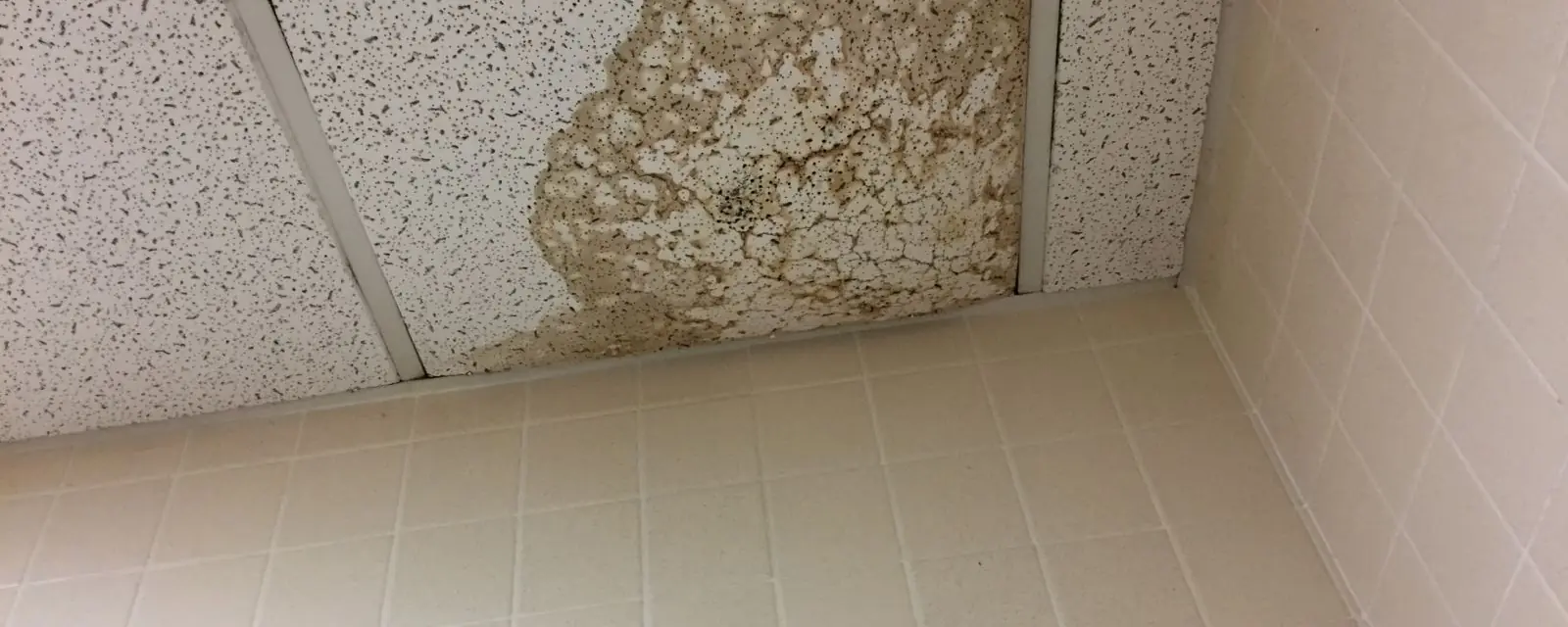
Ceiling water damage is moisture that has soaked into the drywall, paint, insulation or framing above a room, and it nearly always starts somewhere other than where you see it. For a homeowner in Buena Park, CA, the useful question is not how bad the stain looks but where the water is coming from and whether it is still arriving.
Why the stain is rarely above the leak
Water follows gravity and then follows whatever surface it meets. It runs down a rafter, along the top of a pipe, or across the top of the drywall until it finds a seam, a screw or a low spot. The visible mark can therefore sit several feet from the true source.
That is why a flashlight and a ladder help less than you would think. The stain tells you that water reached that spot. Working backward from it, along the likely paths, is how you find the origin.
Five common causes and how each one tends to look
Roof leak
Roof water usually shows up after rain, often as a stain that grows in rings, with a darker edge where it dried and lighter bands inside. The damaged flashing or cracked tile may be a long way uphill from the room. If the stain appears only during or just after a storm, the roof is the first suspect.
Upstairs bathroom or supply line
A leaking tub drain, toilet seal or supply fitting drips onto the floor system, then the ceiling below. These stains tend to be yellow to brown, and they show up under the bathroom or along the pipe run. They can appear in dry weather, and they often grow whenever someone showers or runs the tap.
The ANSI/IICRC S500 standard for professional water damage restoration is the industry reference for how wet materials are assessed and dried, so it is a fair thing to ask a company about.
Air conditioner condensate line
Cooling coils shed water, and a clogged or disconnected drain line sends it into the attic or closet ceiling. Look for a stain near the air handler or under the attic unit that grows on hot days when the system runs most. A full overflow pan above the ceiling is a classic cause.
Water heater in the attic or closet
A tank that is corroding or a relief valve that is discharging can wet a ceiling directly beneath it. These leaks can be slow and constant, so the stain may be dark and spread with time. Because a failed tank can release a lot of water, treat this one as more serious.
Window, stucco or wall envelope
Water that gets behind stucco or around a window can run inside the wall cavity and show on the ceiling at the top of an exterior wall. The stain often runs in a line along the wall edge and follows weather. Sealant that has cracked, or a flashing detail that was never installed, is a common reason.
Signs that the problem is urgent
- The ceiling is sagging or has a rounded belly, which means water is pooled in the board and the weight can bring it down.
- Paint is bubbling or peeling in a wet patch, or there are drips falling right now.
- Dark spots, fuzzy growth or a musty smell show up, which suggests moisture has been present for a while.
- A light fixture or fan sits in or near the wet area, so water and electricity are close together.
- The stain is bigger today than yesterday, which tells you the source is still active.
Seeing one of those signs right now?
Tell a technician what you see and what you have already done. They will explain what to check next.
What to do in the first hour
Put a bucket or a lined trash can under any drip, and move furniture and rugs out of the way. If the ceiling is bulging with water, a small hole at the lowest point of the bulge can relieve it in a controlled way, but only when you can stand clear of the area and keep a bucket under it. If it is sagging badly or you are unsure, stay out from under it and wait for help.
Shut off the power to the room at the breaker if water is near lights, fans or outlets, and do not touch a wet fixture. If you suspect a plumbing source, close the main shutoff valve. Then take photos and a short video of the stain, the surrounding rooms and the date, since you will want a record later.
Mistakes that make it worse
Painting over the stain hides it while the board stays wet. Turning up the heat to dry it can drive water deeper and speed the growth of mold, and a fan pointed at a sagging ceiling can pull loosened material down.
Do not poke a sagging ceiling with a broom handle while standing beneath it, and do not scrape an older textured or popcorn ceiling before it has been tested. Some older coatings contain asbestos, so test before you scrape. If a ceiling has already given way, call a professional instead of cleaning up wet insulation by hand.
What a professional looks at when the water has stopped
A technician confirms the source is off, then maps the damage with a moisture meter and a thermal imaging camera. The camera shows wet areas as cooler patches, so the full extent of the wet board and insulation is known before anything is cut.
From there, the job depends on what is found. Wet material is extracted or removed, and drying equipment goes in. Crews who offer emergency water removal arrive with extraction units and air movers, and a later water damage repair visit handles the rebuild. We also work in La Mirada and Cypress.
Buena Park: dry weather, hotels and why ceilings leak late
Regional records show a dry climate where a few winter storms deliver most of the rain. In Downtown Los Angeles the 1991 to 2020 normal is 14.25 inches a year, with February the wettest month and August the driest. That is the regional picture, not a Buena Park station figure. The practical point is that a roof can sit untested for months, so check ceilings and attic framing after the first heavy storm of the season.
Knott's Berry Farm and the E-Zone along Beach Boulevard make this a tourism corridor with many hotels and restaurants. In those buildings a ceiling stain can mean a supply line above a guest room or an overflow in a commercial kitchen, so managers should photograph it and report the room number and time right away.
Questions from Buena Park homeowners
Can a ceiling stain appear when it has not rained?
Yes. Plumbing, a condensate line, a water heater or a leaking window can all wet a ceiling in dry weather. A stain that grows after showers or on hot days points to the bathroom or the air conditioner.
Is a brown ring always an old leak?
Not always. A ring forms when water dries at its edge, so it can come from a single event or repeated wetting. The way to tell is a moisture meter reading, since a dry ring may be old and a damp one is active.
Should I puncture a bulging ceiling?
Only if you can do it safely. Stand clear, keep a bucket underneath and use a small hole at the lowest point. If it is sagging badly, or the power is not off, stay away and get help.
When does a ceiling stain become a mold concern?
Dark or fuzzy spots, or a musty smell, suggest moisture has been present for some time. Mold needs moisture, so finding and drying the source matters most. Health questions should go to a physician.
Why would a Buena Park hotel or restaurant ceiling stain need quick reporting?
The E-Zone and Beach Boulevard corridor has many hotels and commercial kitchens, where leaks above guest rooms or equipment can spread fast. Note the room or area, take photos and tell building management at once.