
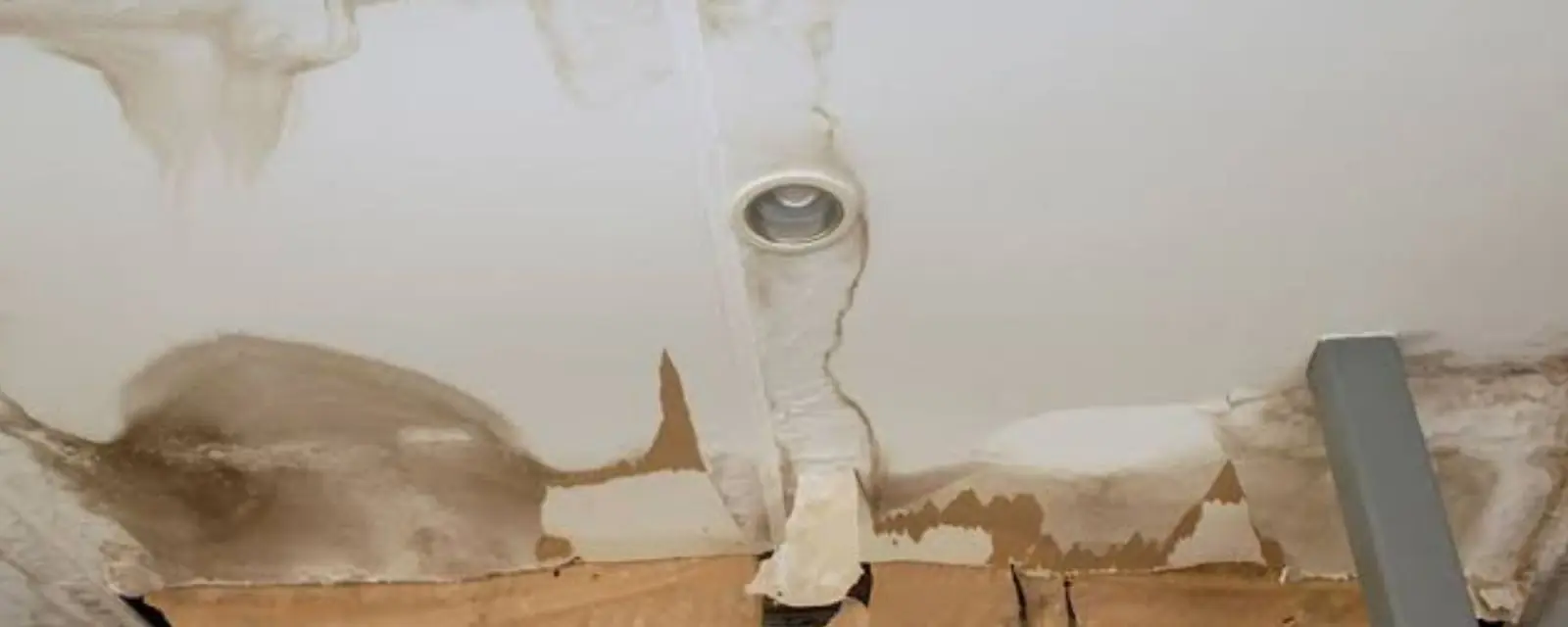
Ceiling water damage repair is the work of finding where the water came from, drying everything it touched, cutting out the material that cannot be saved, and rebuilding the surface so the patch disappears under paint. In a typical Buena Park, CA house that means a drywall ceiling with a knockdown or orange-peel texture, a layer of insulation above it, and a stain that is almost always larger on the back side than it looks from the room.
Find the source before you touch the stain
A stain is only the place where water gave up. It can travel along a joist or a pipe for several feet before it soaks through, so the brown ring on your bedroom ceiling may sit well away from the actual leak. A contractor who starts by sanding the ring is working on the symptom.
A proper assessment uses a pinless moisture meter to read the drywall, and a thermal imaging camera to show cooler wet zones that the eye misses. Your technician also looks above the ceiling, because wet insulation, rusted fasteners and dark framing say more about how long the water has been there than the stain does.
Ask what the source was and whether it has been stopped. A ceiling that is repaired while a supply line, roof flashing or condensate line still weeps will stain again, usually within a season.
Drying comes first, and it takes longer than people expect
Paint and mud will not stick to wet board, and anything sealed over moisture invites mold. Drying a ceiling means pulling water out of the drywall, the insulation and the framing above it, not just letting the room air out. Trade guidance is to start within the first 24 to 48 hours, because wet drywall and padding can begin to grow mold after that.
Crews set air movers to push dry air across the surface and an LGR dehumidifier to pull moisture out of the room. When the cavity above is wet, small access holes let that air reach it. This stage is water mitigation, and it usually runs for several days with readings taken each visit until the numbers match a dry reference spot.
Do not skip the final readings. A ceiling that feels dry to the hand can still read high at the paper face of the board.
What gets cut out, and why
Drywall that has sagged, softened, crumbled or bubbled is removed, because wet gypsum loses its strength and does not recover. Board with only a surface stain and a normal reading can often stay, which saves labor and keeps the repair small.
Wet fiberglass or blown insulation is pulled out and replaced, since it holds water against the board and takes a long time to dry. Water-stained framing is dried and checked, and replaced only when it is soft or damaged.
If your home has an older textured or popcorn ceiling, test before you scrape. Some ceiling coatings installed in earlier decades contain asbestos, and cutting or sanding them can release fibers. A lab test is cheap insurance compared with disturbing the material first.
Three conditions, three different jobs
The same word, ceiling damage, covers very different situations. This table shows how the scope usually changes with the condition you can see from the floor.
| What you see | What it usually means | Typical path |
|---|---|---|
| Small, dry stain | Brief or old leak, board still firm | Fix source, confirm dry, stain-block, patch if needed, repaint |
| Sagging or bubbling | Board is saturated, insulation likely wet | Open and dry, cut out wet board, replace insulation, rebuild |
| Collapsed or musty, dark spots | Long exposure, possible mold growth | Containment, removal, mold work first, then rebuild |
A small stain can hide a wet cavity, so confirm with a moisture meter before you decide it is cosmetic.
Not sure which row your ceiling falls in?
Describe what you see and a technician will tell you what to check and whether a visit makes sense.
Rebuilding the ceiling, step by step
Once the framing reads dry, the rebuild follows a fixed order. Each stage has to cure before the next one begins, which is why a good ceiling repair takes days of elapsed time even when the hands-on work is short.
- Install new insulation, then hang a patch of drywall cut to the opening and screwed into joists or backing strips.
- Tape the seams and apply joint compound in thin coats, sanding between coats until the edge is flat.
- Match the texture. Knockdown, orange peel and smooth finishes each need a different spray or trowel technique, and a good match is the hardest part of the job.
- Prime the whole patch with a stain-blocking primer so tannins and old rings do not bleed through.
- Paint the full ceiling plane from wall to wall, not just the patch, so the sheen is even under daylight.
When to hire out and when to do it yourself
A dry, firm stain of a few inches is a reasonable weekend task if the leak is fixed. Everything past that is where mistakes become expensive, including wet insulation left in place, mismatched texture and paint that peels in a year.
Hire out when the board sags, when the stain has returned after an earlier repair, when the ceiling is above a second story or vaulted, or when anything smells musty. Our water damage repair crews handle the drying, demolition and rebuild together, which keeps one party responsible for the full job.
How to compare two written scopes
Two quotes for the same ceiling can look far apart because they describe different jobs. Put them side by side and check whether each lists moisture readings, drying equipment and days, the area of board to be removed, insulation, texture type, primer and paint coats.
A scope that says only repair ceiling hides everything that matters. Look for who repairs the source, whether painting covers the full ceiling, who disposes of debris, and what happens if the cavity turns out wetter than expected once it is opened.
Ask each contractor for a state contractor's license and proof of insurance, and ask whether crews work to the ANSI/IICRC S500 standard for water damage, a published industry document. Our crews also work in Fullerton and Anaheim, so neighboring homeowners compare the same questions.
Buena Park: where your water comes from and who to call
The City of Buena Park runs its own water utility, with about 19,000 service connections and roughly 225 miles of pipeline. The main shutoff valve is on your property, so find it before you need it. If the leak is on the street side of the meter, the city utility handles it, so call the city for that part and your own plumber for the house side.
About 45 percent of households in the city rent, based on a 55.0 percent owner-occupied rate in the 2020 Census figures. If you rent and a ceiling stains, photograph it and tell your landlord in writing right away, because the repair decision and the insurance question both start with that record.
Questions from Buena Park homeowners
How long does a ceiling take to dry before it can be repaired?
Drying commonly takes several days, depending on how much water got in, the insulation above and the equipment used. Technicians take moisture readings each visit and repairs start only when the board and framing match a dry reference reading.
Can I just paint over a water stain?
Painting over a stain without fixing the leak and confirming the board is dry usually fails. The stain bleeds back, and sealed-in moisture can lead to mold. Stain-blocking primer is a final step, not a substitute for drying.
Do I need to replace the whole ceiling?
Often not. Sagging, crumbling or saturated board is cut out and replaced, while firm dry board can stay. The paint usually covers the whole ceiling plane so the finish looks even.
What should a written scope include?
It should list the source repair, moisture readings, drying equipment and days, board and insulation to be removed or replaced, texture type, primer, paint coats and debris removal. Vague line items are a sign to ask more questions.
If I rent in Buena Park, who handles a stained ceiling?
Photograph the damage and notify your landlord in writing right away, since repairs to the building are normally the owner's decision. With about 45 percent of city households renting, this is common. Check your lease and your renter's policy for contents.