
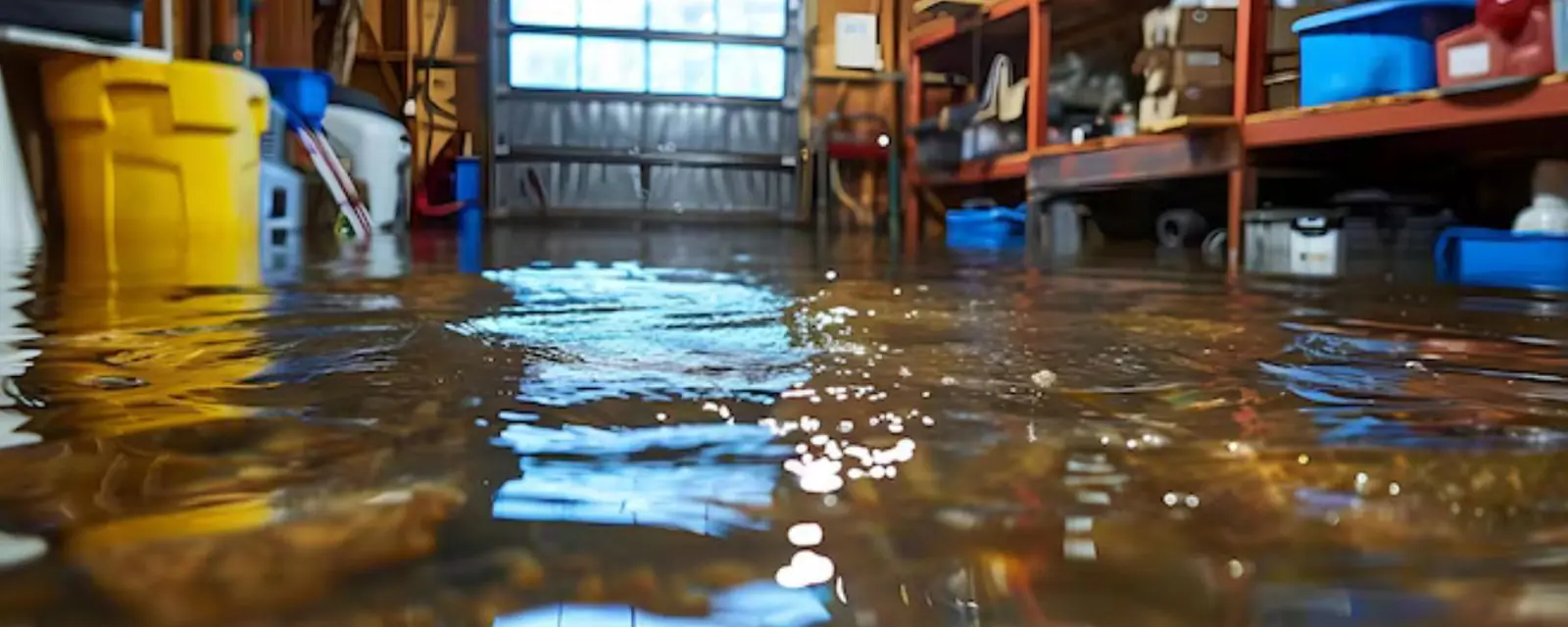
Flood damage cleanup is the work of removing storm water and the contaminated material it leaves behind after rain pushes into a house, garage or shed. In Buena Park, CA, that usually means water that arrived across the ground instead of out of a pipe, and that one fact changes almost every decision you will make. This guide covers the order of work, what goes in the dumpster and how the paperwork differs from a leak claim.
Why storm water is handled differently from a burst pipe
Restoration crews sort water into three categories. Category 1 comes from a clean source such as a broken supply line. Category 2 is gray water, for example a washing machine overflow. Category 3 is black water, which includes sewage and rising flood water.
Water that crosses a yard, a street or a parking lot picks up soil, oil, fertilizer, animal waste and whatever else was lying on the ground. Even when it looks muddy and nothing worse, it is treated as Category 3. Porous materials that soaked it up, such as carpet, padding and drywall, are usually removed instead of dried in place.
This is the main reason a flooded room costs more time and labor than a leaking dishwasher. The cleanup has two jobs, drying the structure and removing contamination, and the second job cannot be skipped.
Safety comes before any cleanup
Do not walk into standing water in a garage or ground floor room until you know the power is off to that area. A submerged outlet, extension cord or garage freezer can energize the water around it. If the panel is in a wet space, leave it alone and ask your electric utility or a licensed electrician to cut service first.
Wear rubber boots, waterproof gloves and eye protection when you do enter. Keep children and pets out, because the water may carry sewage or chemicals from a garage shelf. Gasoline cans, paint and pool chemicals can float and spill, so look before you wade.
Skip the wet-dry vacuum for standing water unless it is rated for it and plugged into a protected circuit. Many household shop vacs are not designed for gallons of contaminated water, and a drowned motor is not the place to learn that.
What to discard and what can be dried
Sort belongings quickly, because contaminated items left in a damp room slow the whole job. A professional crew generally works from a simple rule. Porous and absorbent goods that touched Category 3 water go out, while hard and sealed goods can usually be cleaned and disinfected.
- Usually discarded: wall-to-wall carpet and padding, mattresses, upholstered furniture, particleboard cabinets, wet insulation and drywall that wicked water above the flood line.
- Often cleanable: solid wood furniture, tile, concrete, metal tools, glass and hard plastic, once they are washed and disinfected.
- Case by case: books, photographs and documents. Freeze paper items in sealed bags if you want a specialist to try to save them.
- Food and medicine: throw out anything that touched flood water, including sealed cans with damaged seals and anything in a flooded refrigerator.
Photograph each item before it leaves the property. The next sections explain why that photo matters when you talk to an insurer.
How the structure gets dried
Once standing water is pumped out with truck-mounted or portable extraction units, the crew checks the building with moisture meters and a thermal imaging camera. The camera shows cool, wet patches behind finished walls that your eyes cannot see. The meter then gives a number for studs, subfloor and the lower edge of drywall.
Wet baseboards and the bottom 12 to 24 inches of drywall are often cut away so the wall cavity can breathe. Air movers push dry air across surfaces while LGR dehumidifiers pull moisture out of the room. Readings are taken again each day, and equipment stays until the framing returns to a normal dry range.
Concrete slabs hold water longer than most people expect. A garage floor that looks dry on top can keep releasing moisture for days, which is why the equipment is not removed on a guess. Our flood damage restoration crews log those daily readings so the finish work does not start on damp framing.
Storm water inside your home or garage?
Tell us what the water touched and whether the power is off, and we will explain the next step. Dispatch runs around the clock.
Cleaning and disinfecting after the water is out
Removing the water is not the finish line. Every surface that was submerged or splashed gets scrubbed with a detergent first, because disinfectant does not work well on top of mud and grease. After rinsing, an antimicrobial product is applied and left for its listed contact time before it is wiped or allowed to dry.
Wall cavities that stayed open are treated before they are closed. Hard surfaces such as slab edges, block walls and the lower plates of framing are sprayed or wiped, then dried again. HEPA air scrubbers can run in the work area when demolition has stirred up dust.
Our broader water damage cleanup service follows the same sequence for gray water, so ask which category your crew has assigned to the loss and why. A clear answer tells you how much material they expect to remove.
Buena Park: flood zones, dams and your address
Most of Buena Park sits in the FEMA 500-year flood zone, which means a 0.2 percent chance of flooding in any given year, with 100-year zones mainly along the southeastern border. That does not make your street immune, so look up your exact address on the FEMA Flood Map Service Center before you decide how much flood coverage you need.
Most of the city also lies in the Prado Dam inundation area, and a small part falls in the Fullerton Dam area, according to the hazard analysis cited in the regional plan. If you plan to rebuild a flooded garage or add a room, ask the Buena Park Building Division what applies, because the municipal code has floodplain management rules in Chapter 18.204. The city Public Works department, is the OC Public Works floodplain contact for Buena Park.
Flood insurance is a separate policy
According to the California Department of Insurance, standard homeowners policies do not cover flood. Flood coverage usually requires its own policy, such as one through the National Flood Insurance Program. Homeowners policies typically exclude flood, mudslide and debris flow as well.
That is different from a burst pipe, where sudden and accidental water is often covered. Because the line between the two matters so much, read your declarations page and ask your insurer, in writing if possible, which policy responds to storm water entering at ground level. Your answer may differ if a backed-up drain was involved.
The department also notes that a policy may not pay for further damage if you fail to take reasonable steps to protect the property after a loss. Hiring a crew to extract water and start drying is one of the clearest ways to show you did.
Document before you discard
Take wide photos of each room, then close-ups of the waterline on walls and furniture. Video works well if you narrate what you see. Write down the date and time the water entered and the date you first called anyone.
Keep a short list of discarded items with the approximate age of each. Hold on to receipts for hotel stays, equipment rental and cleanup work. Renters should send the landlord a written notice that day, since roughly 45 percent of Buena Park households rent, and the building owner decides who handles the structure.
Our crews also work in nearby Fullerton and Anaheim, so storm response does not stop at the city line. For Buena Park addresses, call (714) 515-1308 and describe what you see.
Questions from Buena Park homeowners
Is flood water always Category 3?
Water that came across the ground or up through a drain is treated as Category 3 because of what it may have carried. Roof leaks during a storm are sometimes Category 1 or 2 at first, but they degrade the longer they sit in insulation and carpet. A crew decides after looking at the source and how long the water has been there.
Can I dry out a flooded garage myself with fans?
For a small amount of clean rainwater on bare concrete, fans and ventilation may be enough. If the water came from the street, a drain or touched stored goods, contamination matters and fans alone only spread it. Wet drywall and anything porous should be assessed with a moisture meter.
How long does flood damage cleanup take?
Extraction and removal of ruined materials is often done in a day or two. Structural drying typically runs several days until readings come down, and rebuilding follows after that. Thick slabs, large rooms and deep water all lengthen the timeline.
Does my homeowners policy cover storm water that enters my house?
Often not. The California Department of Insurance says standard homeowners policies do not cover flood, and flood protection usually needs a separate policy. Check your policy or ask your insurer how it treats water that enters at ground level.
Where can I check whether my Buena Park address is in a flood zone?
Use the FEMA Flood Map Service Center and type in your street address. Most of Buena Park is in the 500-year zone, with 100-year zones mainly along the southeastern border. The city Public Works department can also point you to floodplain information.