
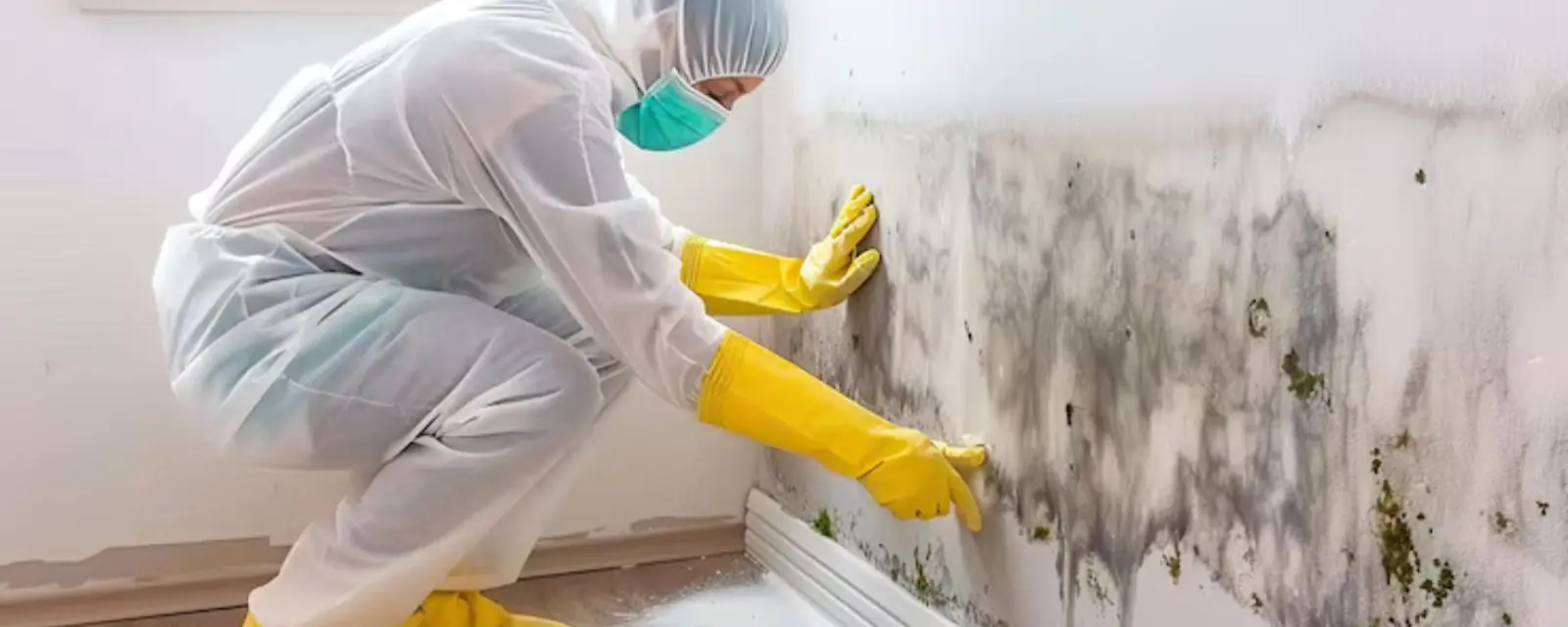
Learning how to remove mold from walls starts with a question about the wall itself, not the mold. A tile shower wall, a painted bedroom wall and a drywall corner behind a dresser all hold moisture differently, so each needs a different response. If you live in Buena Park, CA, the most common wall trouble spots are bathrooms, window corners and exterior walls where furniture blocks airflow.
Find the moisture before you pick up a sponge
Growth on a wall is a symptom. Something is keeping that spot damp, and until it is found, scrubbing only resets the clock. Press a moisture meter against the wall, working outward from the stain in a grid, and note where readings jump.
Typical sources include a shower that leaks through failed grout, a sweating cold water pipe inside the wall, a window that lets in rain, a roof leak that runs down a stud cavity, and indoor humidity that condenses on cool surfaces. A thermal imaging camera can reveal a cold patch where moisture sits, even with no stain on the surface.
Fix that source first. If a plumber needs to open the wall, schedule that before any cleaning, because the cleaning area may grow once you see the back of the drywall.
Tile and grout: the easiest wall to clean
Glazed tile does not absorb water, so growth on it sits on the surface. Grout is the exception, since it is porous and holds moisture in its tiny gaps. Scrub with a stiff nylon brush and a detergent solution, rinse, then dry the wall completely with a towel and a fan.
Dark lines that return a week after cleaning usually mean the grout is saturated or water is getting behind the tile. Press on the tile with the tip of a screwdriver handle. If it flexes, sounds hollow or the backer board feels soft, the problem is inside the wall and cleaning will not fix it.
A silicone caulk bead that has pulled away from the tub is another likely path for water. Cut it out, let the joint dry for a day, and replace it.
Painted drywall: what surface cleaning can and cannot do
Drywall has a paper face that absorbs water, and paper is food for growth. If the spot is small, dry and sits on the paint without softening the board, surface cleaning may be enough. Put on an N95 or better respirator, gloves and goggles, then wipe with a damp cloth and a mild detergent solution.
Work in one direction and fold the cloth often, because dragging it back and forth spreads growth to clean areas. Do not soak the wall. Excess water pushes moisture into the board, which defeats the point.
Avoid mixing cleaning products. Bleach combined with ammonia or acidic cleaners can release dangerous gases, and bleach on porous drywall does little for what is under the paint.
Let the wall dry for a full day with a fan on it. Then check it again with a moisture meter before you decide it is finished.
When drywall has to be cut out
Some conditions mean cleaning is the wrong tool. Cut-out is the standard answer when the board is soft, crumbly, swollen, stained through to the back, or has visible growth on both sides. The same goes for insulation that has been wet. Both cannot be cleaned back to a safe condition.
- The growth covers a patch larger than about 10 square feet.
- The drywall bulges, crumbles or feels spongy.
- The musty smell stays after cleaning and drying.
- Growth returns within days of wiping.
- A supply line, drain or roof leak soaked the wall.
- The wall is in a room served by the HVAC and the vents show growth too.
A cut-out done well means plastic containment, a HEPA air scrubber and removal one clean cut beyond the damage. That is why most large jobs go to a crew. Our mold remediation team handles the containment and cleaning, and the rebuild afterward falls under our water damage repair service.
Unsure whether a stain is surface or structural?
Call and describe the wall, the room and how long it has been damp. We will tell you whether it sounds like a cleaning job or a cut-out.
Bathroom exhaust fans and everyday humidity
A bathroom fan should move steam out of the house, not into the attic. Check that the duct is connected and ends outside. Hold a square of toilet paper against the grille while the fan runs. If it does not stick, the fan is weak or blocked.
Run the fan during every shower and for at least 20 minutes afterward. If the room has no fan, a window left open and a squeegee on the shower wall help. A small humidity meter lets you see the number instead of guessing, and indoor humidity above about 60 percent is the range to watch.
Exterior walls and the furniture problem
Large pieces pushed flat against an exterior wall trap cool, still air. Moisture from a closet, bedroom or kitchen condenses there and the paint turns spotty. Pull the dresser, bed or bookshelf a few inches off the wall and check behind it.
If you find spotting, look at the outside of that wall. Cracked stucco, a failed window seal or a gutter that spills against the siding can bring water in. Photograph what you see before you start, because your landlord or insurer may ask.
Buena Park: renters, the dry climate and wall damage
About 45 percent of Buena Park households rent, since the owner-occupied rate is 55.0 percent. If you rent and find growth on a wall, photograph it, write down the date and tell your landlord in writing before you clean or cut anything. The structure is the owner's responsibility in most cases, and a written notice protects you if there is a dispute later.
The regional climate is dry. The National Weather Service reports a 1991 to 2020 normal of 14.25 inches of rain a year for Downtown Los Angeles, with February the wettest month. That is a regional picture, not a Buena Park station number, but it shows that a few winter storms deliver most of the rain. Walls that stay wet in a dry climate usually have a plumbing, window or roof source, so go looking for one.
Signs you should stop and call
Stop cleaning if you cannot find the moisture source, if the stain returns, if the damp area spreads past a few square feet or if anyone in the home has health concerns. Those who have questions about mold exposure should speak with a physician.
Our crews also work in Fullerton and La Mirada, and the same walk-through applies there. Ask any company for its California contractor license, since the state does not license mold remediators and work of $500 or more needs a contractor's license.
Questions from Buena Park homeowners
Can I use vinegar or bleach to remove mold from a wall?
Detergent and water do most of the work on hard surfaces. Bleach has limited effect on porous drywall because it stays on the surface, and it should never be mixed with ammonia or acids. Whatever you use, drying the wall is the part that matters.
Should I paint over mold on a wall?
No. Paint over growth hides it and traps moisture, and the spot usually comes back through the paint. Clean or remove the material, confirm it is dry, then prime and paint.
How do I tell mold from dirt or mildew stains?
Dirt wipes off and stays gone, while growth tends to return and often smells musty. A small test wipe with a damp cloth can help, but only a sample or inspection can confirm what it is. Either way, look for a moisture source.
Is it normal to find growth behind furniture on an outside wall?
It is common. Furniture blocks airflow and exterior walls run cooler, so humid air condenses there. Pull pieces a few inches away from the wall and watch for spotting.
As a Buena Park renter, who pays to remove mold from a wall?
The answer depends on your lease and the cause, but the building structure is generally the owner's concern. Report it to your landlord in writing, keep photos and ask for a response. About 45 percent of Buena Park households rent, so this comes up often.