
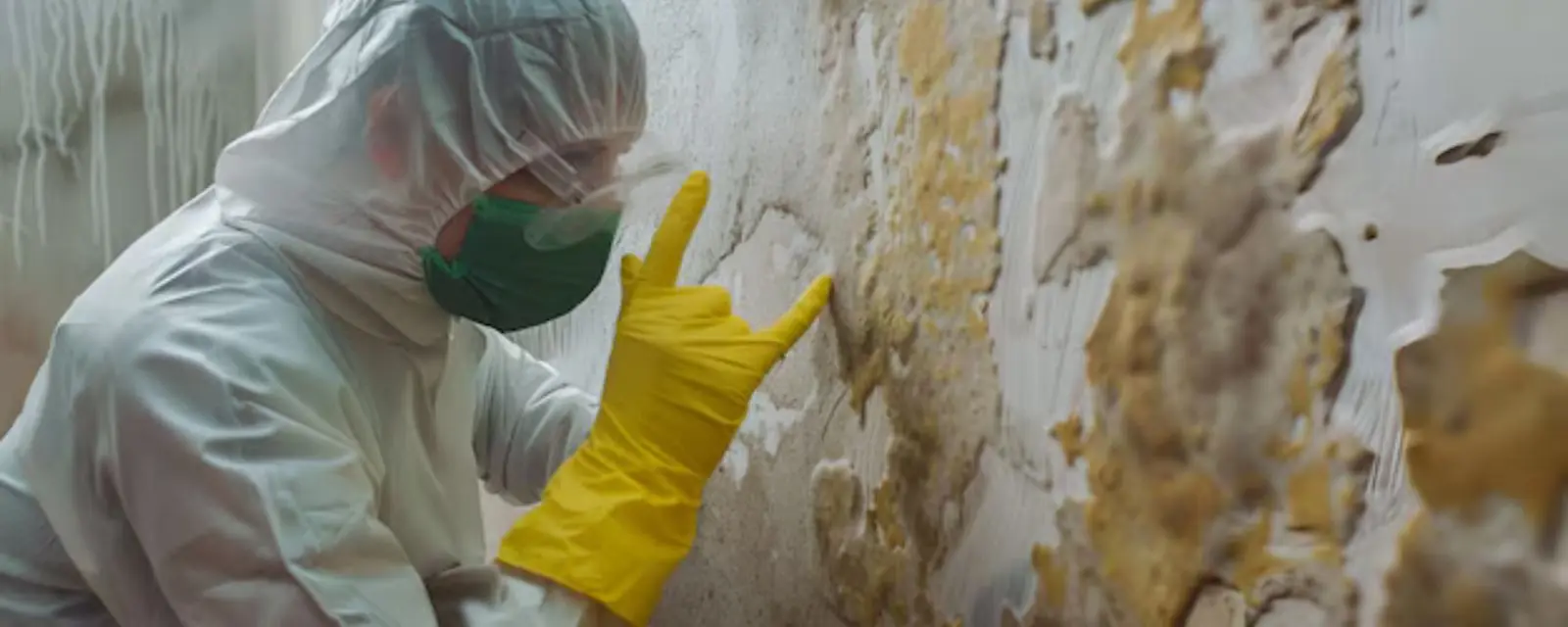
Professional mold removal is a controlled job in which a contractor finds the moisture behind the growth, seals off the affected area, takes out what cannot be cleaned and proves the space is clean afterward. In Buena Park, CA, there is no state mold license to lean on, so you need to know what a proper job looks like before you hire anyone. This article follows a job from the first visit to the final test.
The first visit is mostly about water
Mold grows where materials stay damp, so a good inspector spends more time looking for moisture than looking at the spots. Expect a moisture meter on drywall and framing, a thermal imaging camera along suspect walls and ceilings, and questions about past leaks, remodels and plumbing repairs.
The inspector should also tell you what the visit could not see. Growth behind tile, inside a wall cavity or above a ceiling may only show up when the material is opened. A contractor who promises an exact scope without any of that caveat is guessing.
If the moisture source is still active, it comes first. A leaking supply line, failed shower pan or damp roof deck will bring growth back no matter how well the surface is cleaned. Our water damage repair team handles the rebuild once the source is fixed and the area is dry.
A written protocol should exist before work starts
Ask for a document that lists the affected rooms, the materials to be removed, the containment method, the equipment, the cleaning steps and how the job will be verified. A protocol is not a sales sheet. It is the plan the crew follows and the document you compare against the finished work.
Industry practice for mold work follows the ANSI/IICRC S520 standard for professional mold remediation. It is a published standard, not a badge, so the useful question is whether the crew actually works to it and which sections apply to your house.
Compare two bids by their protocols instead of their totals. If one lists containment, negative air and HEPA filtration and the other says only treat and paint, you are not comparing the same job.
Containment keeps the problem where it started
Cutting into moldy drywall can send spores and dust through the rest of the house. To prevent that, a crew builds a barrier of heavy poly sheeting taped to the floor, walls and ceiling around the work zone. A zipper door lets workers pass in and out without opening the whole room.
Inside the barrier, a HEPA-filtered air machine creates negative air pressure. That pulls air into the work area and out through the filter, so airflow carries dust inward instead of toward your living space. The duct for the machine is usually run to the outdoors or to a filtered exhaust.
Supply registers and returns in the work area are covered, and workers wear respirators, gloves, eye protection and disposable suits. Ask where the crew will change and how waste leaves the home.
Want a second set of eyes on a scope?
If you already hold a bid or a protocol, call and we will talk through what each line should include. Dispatch is available 24/7.
What gets removed and what gets cleaned
Porous materials that hold growth, such as drywall, insulation, carpet and ceiling tile, are usually cut out and bagged. Hard surfaces such as framing, concrete and tile can often be cleaned by HEPA vacuuming and damp wiping. Wood framing with surface growth may be sanded, brushed or media-blasted, depending on the condition.
Spraying a coating over growth is not removal. Painting over mold hides it, and a damp board under fresh paint is exactly where it returns. Antimicrobial products may be used as part of the cleaning, but they do not replace physical removal.
Every cut should stop at clean, dry material, and the crew should note how far past visible growth they cut. Photos before and after, with moisture readings, are a good sign of careful work.
Clearance testing should come from someone else
When cleaning is done, an independent third party can inspect the space and sample the air or surfaces. Independent means the person testing does not profit from the cleanup. The test compares conditions inside the work area to a reference, and the contractor should not clear its own job.
Do not take down containment until clearance passes. If it fails, the crew re-cleans and the area is tested again. Rebuilding with new drywall, insulation and paint comes after, not before.
Mold needs moisture to grow, and no contractor can promise it will never return. What they can show is that the source was fixed, the area dried to a normal range and the cleanup passed testing.
| Stage | What happens | What to ask |
|---|---|---|
| Inspection | Moisture mapping, thermal imaging, source search | What could you not see today? |
| Written protocol | Scope, containment, equipment, verification plan | Which S520 sections apply to my job? |
| Containment | Poly barriers, zipper door, HEPA negative air | Where does the exhaust go? |
| Removal | Cut out porous material, bag it, HEPA vacuum framing | How far past visible growth will you cut? |
| Cleaning and drying | Damp wipe, antimicrobial where needed, dehumidify | What moisture reading counts as dry? |
| Clearance | Independent inspection and sampling | Who tests, and are they separate from you? |
| Rebuild | New drywall, insulation, paint | Is rebuild in the same contract or separate? |
Use the same questions with every contractor so the answers can be compared side by side.
How to vet a contractor in California
According to the California Department of Public Health, the state has no licensing for mold remediators and no state regulations on mold inspection, assessment or remediation. That puts the vetting on you. Ask for a written scope, proof of insurance and the contractor's references from jobs of similar size.
Check that the company has a California contractor's license on file and that the license is active. The state contractor's license board, CSLB, is the place to confirm it. Do not rely on a certificate or a logo alone.
Buena Park: licenses, ZIPs and who to call
The California Department of Public Health notes that construction or improvement work of $500 or more requires a state contractor's license. That figure applies to the contract, so a mold job that includes demolition and rebuild will usually cross it. Before you sign, ask any bidder for the California contractor license number and what standard its crews follow, which in this field means ANSI/IICRC S520.
We handle water damage and mold work in ZIP codes 90620 and 90621 and run dispatch around the clock from our office on Orangethorpe Avenue. Restoration crews also serve Anaheim and La Palma. Our mold remediation page lays out how our own jobs run.
Red flags before you sign
- A price offered over the phone with no visit, no moisture check and no look at the source.
- No containment plan, or a plan that relies on a few plastic sheets stapled to a doorway.
- A contractor who tests the air and clears its own work.
- Pressure to sign the same day, or a promise that mold will never come back.
- No California contractor license and no willingness to show insurance.
If anyone in your home has health questions related to mold exposure, talk to a physician. A contractor can fix a building, but it cannot answer medical questions.
Questions from Buena Park homeowners
Is a mold inspection the same as mold removal?
No. An inspection finds moisture and growth and records what it sees. Removal is the physical work of containing, cutting out and cleaning. Many homeowners separate them so the party testing is not the party doing the cleanup.
Do I need to leave my home during professional mold removal?
It depends on the size of the area and where the air handler sits. Small jobs behind containment may let you stay in other rooms, while larger ones or those touching the HVAC may call for a temporary move. Ask the contractor before work starts.
How long does professional mold removal take?
Small, contained areas can be finished in a few days, while larger scopes with demolition, drying and clearance run longer. Drying and waiting on test results often decide the schedule more than the cleanup itself.
Does California license mold remediators?
No. The California Department of Public Health says the state does not license mold remediators. Work of $500 or more does require a state contractor's license, so ask for the contractor license number and check it with CSLB.
Which ZIP codes in Buena Park do you cover for mold work?
We cover 90620 and 90621 for water damage and mold work in Buena Park. Our address is 6122 Orangethorpe Ave, and the dispatch line is (714) 515-1308.