
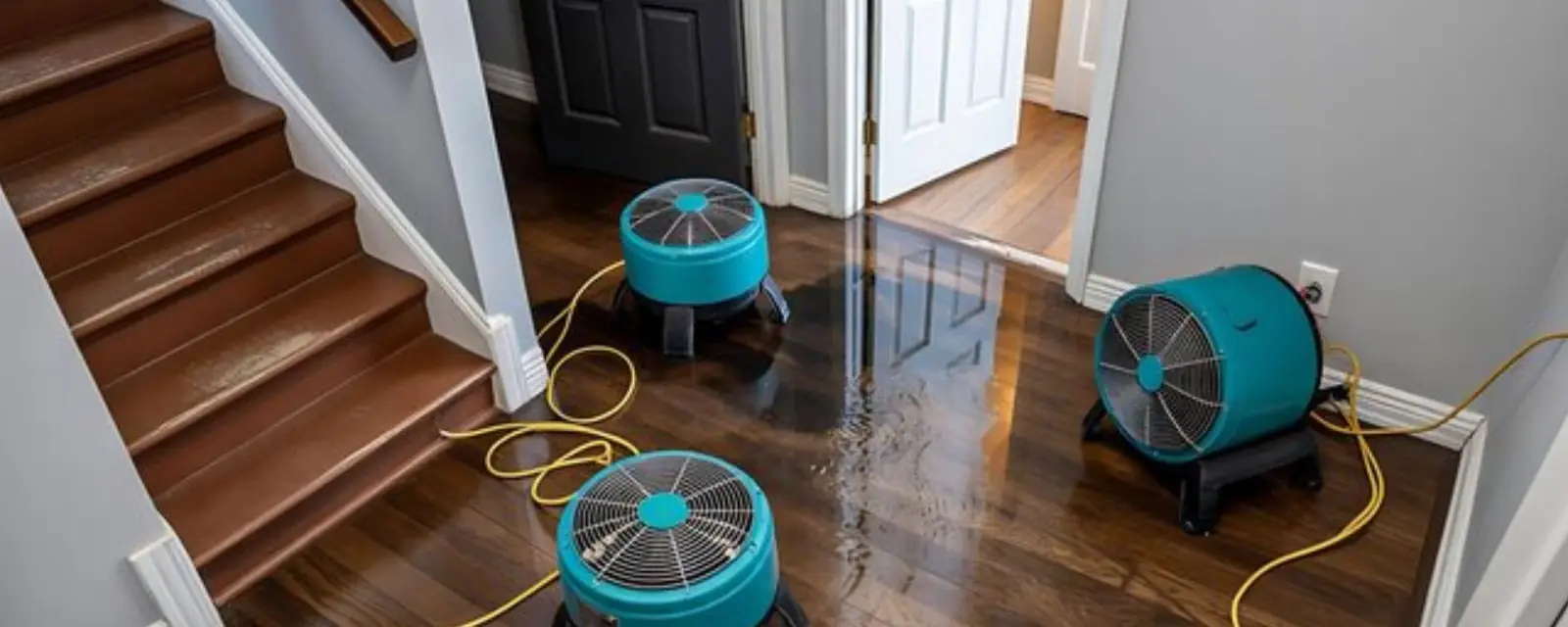
Water damage restoration is the full process of returning a building to its pre-loss condition after water gets in where it should not be. In Buena Park, that usually starts with a burst supply line, an overflowing appliance or a roof leak, and it ends with dry, clean, rebuilt rooms. The term covers three separate jobs that people often lump together, and knowing which is which makes estimates much easier to read.
Three words that get mixed up
Mitigation is the first job. It means stopping further loss: extracting standing water, removing materials that cannot be saved and drying the structure. Restoration is the wider umbrella that includes mitigation plus cleaning, deodorizing and returning contents and surfaces to usable condition. Repair is the rebuild, such as new drywall, flooring, trim and paint.
These stages often have different people and different paperwork. A drying crew may finish in a few days, while a rebuild can take weeks because it waits on materials and scheduling. Our water mitigation service covers the first stage, and the water damage repair page covers the rebuild.
The standard behind the work
ANSI/IICRC S500 is the published industry standard for professional water damage restoration. It sets out how to assess a loss, classify the water, choose drying methods and document progress. You can ask any company whether its crews work to it, and what that looks like on a real job.
The standard is a reference, not a license. California regulates contractors through the state contractor's license board, so a company doing construction work should hold a license and carry insurance. We are licensed and insured, and you should expect any restoration firm you hire to say the same in writing.
Water categories decide how risky the job is
Water is sorted by how contaminated it is. Category 1 comes from a clean source such as a broken supply line. Category 2, sometimes called gray water, comes from a washing machine or dishwasher overflow and carries some contamination. Category 3, or black water, includes sewage and rising flood water, and it needs protective gear and removal of porous materials.
| Category | Typical source | What is usually done |
|---|---|---|
| Category 1 | Broken supply line, tap left running | Extract, dry in place, monitor moisture |
| Category 2 | Washing machine or dishwasher overflow | Extract, clean, remove soaked padding, dry |
| Category 3 | Sewage backup, rising flood water | Contain, remove porous materials, disinfect, dry |
Clean water left too long can slip to a higher category, so time matters.
Water also changes category with time. Clean water that sits in carpet for days picks up bacteria and starts to behave like Category 2. That is why crews ask how long the water has been there before they decide what to remove.
Classes of loss describe how much water is hiding
The same standard also sorts jobs into four classes by how fast moisture will evaporate. Class 1 affects a small area with little absorbed water. Class 2 reaches a whole room, including carpet and cushion. Class 3 means water came down from above, so walls, insulation and ceilings are saturated. Class 4 involves deep materials such as hardwood, plaster and concrete that hold water stubbornly.
The class drives the equipment plan. A Class 1 loss may need a couple of air movers, while a Class 3 loss may need wall cavity drying, ceiling openings and several LGR dehumidifiers running together.
Not sure what stage your loss is in?
Tell us what happened and we will explain the likely steps for your Buena Park, CA property.
Moisture mapping and equipment
A restoration crew does not guess where water went. A pin-type moisture meter reads wood and drywall, a pinless meter scans larger surfaces and a thermal imaging camera shows cool, wet patches behind finished walls. The readings are recorded on a sketch of the rooms, which becomes the baseline for the whole job.
Drying equipment then goes in. Air movers push dry air across wet surfaces, LGR dehumidifiers pull moisture out of the air, and extraction units lift standing water from carpet and hard floors. Crews return each day to read the same spots, and the equipment leaves only when the readings reach the dry standard set at the start.
The phases from call to final walkthrough
Stop and assess
The crew finds the source, classifies the water and measures how far moisture has traveled.
Extract and remove
Standing water is pumped or vacuumed out, and ruined padding, soaked drywall or insulation is removed.
Dry and monitor
Air movers and dehumidifiers run while daily readings track progress toward dry.
Clean and rebuild
Surfaces are cleaned and treated, and any needed repairs begin once the structure is confirmed dry.
Buena Park: what local conditions mean for a restoration job
Buena Park has a population of 84,034 in the 2020 Census, and 55.0% of homes are owner-occupied, so roughly 45% of households rent. If you rent, photograph the damage and tell your landlord in writing right away, because the repair stage is often the owner's responsibility even when you need to move belongings out of the way.
The City of Buena Park runs its own water utility, with about 19,000 service connections and roughly 225 miles of pipeline. The main shutoff valve is on your property, so find it before there is a problem. A leak between the street and the meter is the city's to handle, which means you call the city for the street side and a restoration company for what got wet inside.
Most of the city is in the FEMA 500-year flood zone, with 100-year zones mainly along the southeastern border. Rising flood water is Category 3, and homeowners policies usually exclude flood, so check the FEMA Flood Map Service Center for your address and ask your insurer about separate flood coverage.
What restoration does not include
Restoration does not fix the thing that leaked. A plumber replaces a failed supply line, a roofer repairs a roof and a technician replaces a broken appliance hose. Restoration deals with what the water left behind.
It also does not decide how an insurer will respond. Sudden and accidental water damage is often covered, gradual leaks and neglect often are not, and flood is usually excluded. Check your policy and ask your insurer what documentation it wants, and keep moisture logs and photos from the crew.
Timing and what happens if you wait
As general trade guidance, wet drywall and carpet padding can start to grow mold if they are not dried promptly, often within the first 24 to 48 hours. Waiting also spreads moisture into wall cavities and subfloors, which turns a small extraction job into a larger drying and rebuild job. Crews also work in La Mirada and Cypress, so the same stages apply across the area.
Questions from Buena Park homeowners
Is water damage restoration the same as repair?
No. Restoration starts with mitigation and drying and then cleaning, while repair is the rebuild with new drywall, flooring and paint. Many losses need all three in order.
How long does the drying stage take?
It depends on the class of loss, the materials and the equipment, so crews track moisture readings instead of promising a number of days. Daily meter readings show when the structure is dry enough to rebuild.
Do I need to leave my home during restoration?
Often you can stay for a Category 1 loss in one room, though air movers are loud. For Category 3 water or large losses, the affected area is usually sealed off and some families choose to stay elsewhere. Ask the crew what applies to your situation.
What does ANSI/IICRC S500 mean for me?
It is a published standard that describes how water damage should be assessed, classified and dried. Ask any company whether its crews work to it and how they document readings.
I rent in Buena Park. Who handles restoration?
Start by photographing the damage and notifying your landlord in writing. The building and its repairs are usually the owner's responsibility, while your own belongings may be covered by a renters policy, so check your policy and talk to your insurer.